 General Tech
Deep dive into Azure Maia 300 architecture
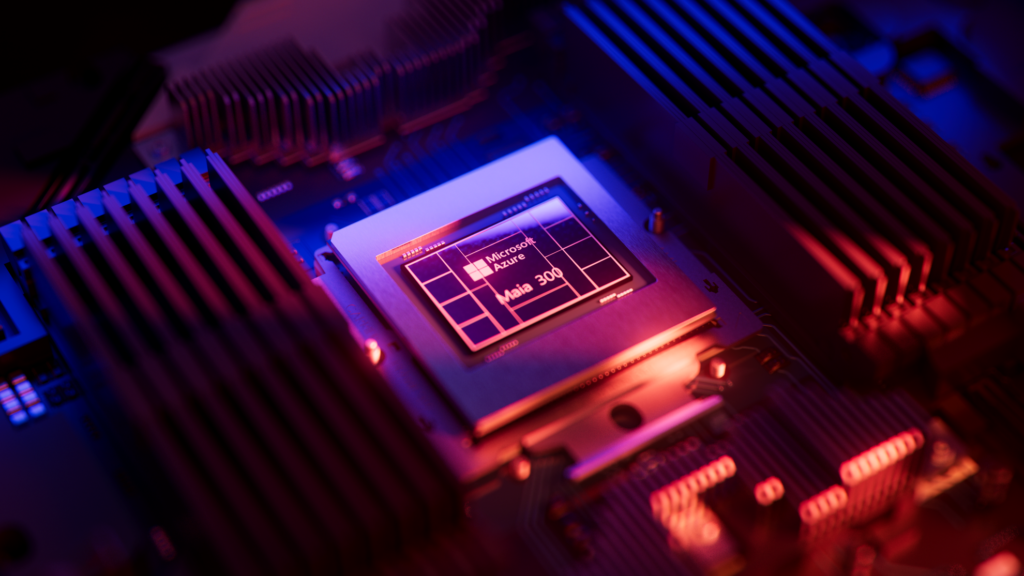
Azure Maia 300 is a new hardware architecture designed by Microsoft to improve the performance and efficiency of Azure's data centers. It is a 3rd generation architecture, following Azure Maia 200 and Azure Maia 100. The new design aims to provide 1.8x better performance and 1.5x better power efficiency compared to the previous generation. This is achieved through a combination of improvements in hardware and software components. The hardware includes a new CPU, GPU, and memory architecture, as well as a new system-on-a-chip (SoC) design. The new CPU features a 3D stacked design with a 4+4 core configuration, with each core containing 6 execution units. The new GPU features a 3D stacked design with 24 cores and 576 execution units. The memory architecture has been improved with a new type of memory called 'Xpoint' which provides 6x the bandwidth of traditional DDR5 memory. The SoC design has been optimized for low power consumption and high performance. The software components include a new hypervisor and a new operating system. The hypervisor provides a high degree of isolation between virtual machines, while the operating system has been optimized for performance and security. The new architecture also includes a new type of storage called 'Optane' which provides high-speed storage with low latency. The Optane storage is used to store data that is frequently accessed, such as operating system files and user data. The Azure Maia 300 architecture is expected to be widely adopted in Azure's data centers, and will provide significant improvements in performance and efficiency. The architecture is designed to support a wide range of workloads, including cloud services, big data analytics, and machine learning. The architecture is also designed to be highly scalable, with the ability to support thousands of virtual machines and containers. The Azure Maia 300 architecture is a significant step forward in the evolution of Azure's infrastructure, and demonstrates Microsoft's commitment to innovation and customer satisfaction.
Read the full article at azure.microsoft.com →